Runbox is dedicated to providing sustainable email services from the heart of Norway, where strict privacy regulations safeguard your data. We’re excited to introduce 3-year plans that offer a 20% discount. By choosing Runbox, you support sustainable practices that make a positive impact on the environment while enjoying fast, secure, and privacy protected email services from Norway.
We pride ourselves on delivering premium email services at an affordable price. In fact, we have not increased our prices since our company’s inception, and at the same time we have added substantial storage to all our plans. In a time when price hikes on essential services have become the norm, we believe in offering you predictability and stability for a service as vital as email.
In today’s digital world, privacy and security are more important than ever. As we navigate online communications, it’s important to understand how encryption can safeguard our emails. Let’s explore what encryption is, how it works, and why you want to consider using it.
What is Encryption?
When you send an email without encryption, it’s like sending a private message on a postcard – anyone who handles it can read its contents. At its core, encryption works by converting the readable data of an email into a scrambled format. Basically, the contents of that email turns into gibberish so that nobody can read it. The point is to keep the email private while it’s in transit from you to the recipient.
Even though most email services use some form of encryption for data in transit, this is not the same as end-to-end encryption. With end-to-end encryption, only the sender and the recipient can read the message. This method effectively prevents anyone else, including email providers, from accessing the content of your messages.
While many of us might feel that we have little to hide and aren’t overly concerned about others reading our communications, it’s important to understand how our information could be accessed. Encryption helps to safeguard our personal information, which may contain sensitive details about our personal finances, family matters, or other private information.
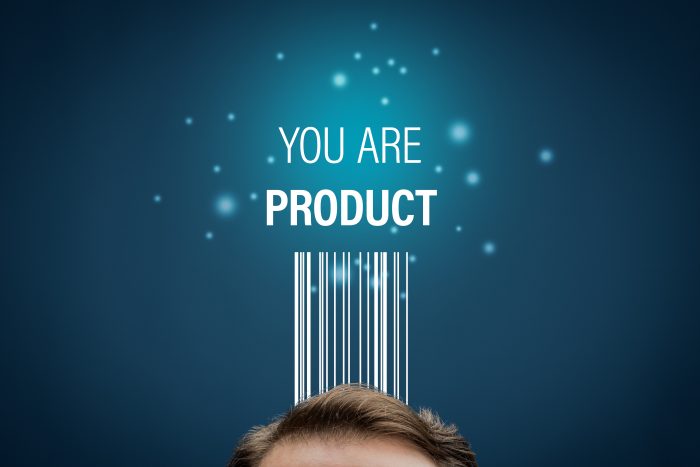
You’ve been happily using free email for years, and haven’t thought much about it. The problem is that it’s not truly free—you’re paying with your privacy. In the world of digital communication, you become the product. Let’s dive into what it means.
1. Free is not free
With countless services offering “free” email accounts, it’s easy to assume that we can communicate without any cost. But companies that offer free email typically rely on advertising revenue, which means they collect vast amounts of data about our habits, interests, and communications. They use this information to tailor advertising, and that’s how they make money.
Email aliases are great – they help organize emails, reduce spam and protect our identity. But sometimes we need a quick way to create an alias without having to log in to our account to set it up. That’s when we can use plus-addressing, or subaddressing.
You simply add a + to your email address followed by a tag.
Any email sent to a plus-address is delivered to your account as usual. The message is still addressed to the plus-address, and you can use this in various ways to manage your email.
Plus-addressing benefits
Make up addresses on the fly without having to set anything up in your Runbox account.
Works with any email address, alias or domain.
Use a plus-address to identify sites where you used your email address.
Plus-addresses can help hide your main email address.
Use a different tag for each site so that if one has a data leak you know which one it is.
Filter email to specific folders based on the plus-addressing.
Create a filter to delete email to that particular plus address if it starts receiving spam.
Plus-addressing and email aliases are great tools to manage your email. With a Runbox account you get unlimited plus-addressing and 100 email aliases. If you have your own domain name, you get unlimited aliases. Check out this post for more info about aliases.
You can get more details about plus-addressing here.
To learn about how to create email aliases, check out this blog post.
Do you use email aliases? Aliases are a great tool that can help protect your identity, reduce spam, and organize your inbox.
Aliases are alternative email addresses that you can use to separate emails. Instead of using the same address for everything, you set up different aliases for online subscriptions, registrations, newsletters, social media, business contacts and so on. Any category that works for you. You can use your main address for friends and family, or create another alias.
All your aliases are set up under your main email account, and is delivered to your primary inbox. You can even set up filters so that mail is separated into specific folders in your account.
Not only will aliases give you another layer of anonymity, it also gives you control over your information and makes online tracking more difficult. Having aliases can help prevent someone hacking your main email account, and helps protect you from phishing attacks. If one of your aliases starts to receive lots of spam, you can easily delete the alias and set up a new one.
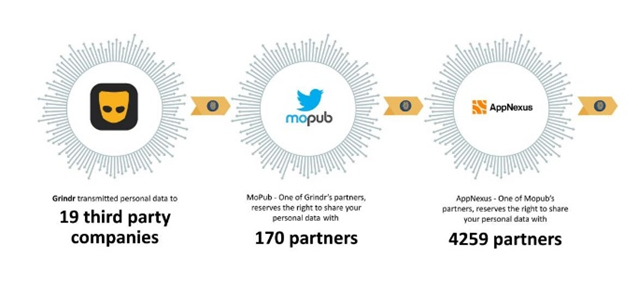
Oslo District Court has found Grindr’s sharing of personal data illegal as a result of the Norwegian Consumer Council complaint from 2020. Accordingly, Grindr has to pay EUR 5 million, as fined by the Council.
Our guardians of personal data and privacy: NDPA, NPAB, and NCC
As we have written multiple times in our blog series about GDPR and consequences of this EU-regulation, Norway has a long history of protecting citizens’ personal information. It started out with the first Personal Data Act implemented in 1978 with the purpose of protecting the individual against privacy being violated through the processing of personal data. The law was updated with GDPR clauses in the year 2000.
In 1980, the Norwegian Data Protection Authority (NDPA) was established as an independent authority whose task is to monitor compliance with the Personal Data Act. It is important to note that the NDPA has two roles: supervisory authority and ombudsman.
The NDPA decisions may be appealed to NPAB, Norwegian Privacy Appeals Board (Personvernnemda), whose decisions are final.
During recent years, another Norwegian governmental public body, the Norwegian Consumer Council (NCC), whose role is to protect consumers’ interests, has become involved in privacy, more precisely the misuse of personal data that big tech companies are involved in. As a governmental-independent agency, the NCC is free to chose the cases they want to work on.
Sharing of personal data is illegal without specific consent: The Grindr case
Recently, the NCC has put effort into the task of preventing the big tech companies from using personal information for surveillance-based marketing that the users have not consented to. Neither have users given consent to how personal data is transmitted to the companies’ partners.
When we go online or use apps, we are being tracked. Companies collect our personal data by tracking us across the web sites we visit. They build profiles on us based on our browsing history and online behavior. They want to sell us their products and services, and the more they know about us the better they can use this data to manipulate our behavior.
You know those ads that pop up everywhere after you looked up something? After you’ve looked up a new car, car ads follow you around all day. You research a vacation to Alaska, and travel ads show up everywhere. This is the result of targeted advertising, which is based on data they collected on you. Some call it surveillance capitalism, and it’s big business.
Privacy is about how your data is collected, processed, stored and used. It’s about maintaining control over your personal information and your identity. Privacy isn’t about hiding secrets, it’s about keeping your personal information safe from people who can do harm.